


Growing Cannabis in Northern Thailand: Light Is Free, Humidity Is Not
Northern Thailand gives you the best light in the world and then tries to rot your crop for four months. What actually works here, from our farm an hour south of Chiang Mai, at San Pa Tong.
Published
We grow at Laddaland, about an hour south of the shop at San Pa Tong, and we buy from other growers around Chiang Mai who are doing the same thing. This is what the climate here actually does to a cannabis plant, written for anyone curious rather than anyone about to start a farm.
The good part
Northern Thailand sits around 18 degrees north. Strong, consistent light, a long season, and warmth that means you are never fighting to keep a room above minimum.
Growers in northern Europe spend enormous sums replicating conditions we get by opening a roof. That is a genuine advantage and it is why Thailand looked, in 2022, like it was about to become a serious producer.
The part nobody mentions
Then the monsoon arrives.
From roughly June to October, relative humidity here sits above eighty-five percent for weeks at a time. For most crops that is an inconvenience. For cannabis in flower it is an emergency, because a dense flower holding moisture in warm air is an ideal environment for botrytis, bud rot.
Bud rot is fast and it is sneaky. It starts inside the flower where you cannot see it. By the time the outside looks wrong, it has usually spread. You can lose a room in under a week.
Everything about growing well in this region is downstream of that one fact.
What actually works
Space the plants further apart than the charts say. Every guide optimises for yield per square metre, written by people in dry climates. Here, airflow between plants beats density. You harvest less and you harvest something.
Move air constantly. Not just extraction, circulation. Still air around a flower in this humidity is where rot starts.
Dehumidify hard in flower. The last few weeks are when it matters most, because that is when the flowers are dense enough to hold moisture internally.
Pick genetics that suit the climate. Airy, open flower structures dry out between waterings. Dense, tight cultivars look better in a photograph and rot faster here. A lot of the fashionable American genetics are exactly the wrong shape for this place.
Harvest on the weather, not the calendar. If a week of rain is coming and you are close, take them. A few days early beats losing the lot.
The dry season is a different country
November to February is the reason people grow here. Cool nights, low humidity, strong light. Outdoor cannabis in a northern Thai cool season, grown properly, can be genuinely excellent and tastes of where it came from in a way indoor rarely does.
The trade-off is that it is one window a year. Anyone supplying a shop year-round needs indoor or covered growing for the rest of it.
Drying, which is where most of it is lost
More quality is lost after harvest than during the grow, and in this climate the margin is tighter.
Dry slow, in the dark, cool. Somewhere around 18 to 20 degrees and 55 to 60 percent humidity, for ten to fourteen days. Faster than that and you keep the chlorophyll and lose the terpenes, which is why rushed cannabis smells of hay.
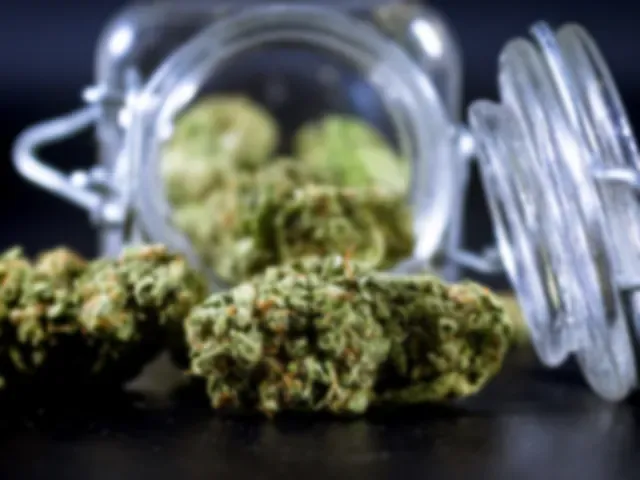
Then cure slower. Sealed glass, opened daily at first, then less often. Weeks, not days. This is where the smell arrives.
The temptation when the shelf downstairs looks thin is to pull something at day six. We have done it. It is always a mistake and you can taste it in the jar.
If you are thinking of growing here
Check your legal position first. Cultivation in Thailand requires registration or a licence depending on scale, and those requirements have moved more than once since 2022. Work out what applies to you before you plant, not after.
And do not travel with seeds. They count as cannabis material at a border.
Come and ask
We are not running farm tours, it is a working site. But if you want to talk about growing, ask in the shop. Most of us would rather have that conversation than sell anything.
More on the farm here, and the seed side of it, Sweettooth Seeds, here.
Common questions
What is the best time to grow cannabis outdoors in northern Thailand?
The cool dry season from roughly November to February gives the best outdoor conditions in northern Thailand. The wet season from June to October brings humidity high enough that mould becomes the dominant risk.
Why is humidity a problem for growing cannabis?
High humidity around dense flowers encourages bud rot, a mould that can destroy a crop within days and is often invisible from the outside until it has spread. Northern Thailand regularly exceeds 85 percent relative humidity during the wet season.
Is it legal to grow cannabis in Thailand?
Cultivation in Thailand requires registration or a licence depending on scale, and the requirements have changed several times since 2022. Anyone planning to grow should confirm their current obligations before planting.
Do you need indoor growing in Thailand?
Not always, but consistent year-round quality in northern Thailand generally requires indoor or covered growing, because it is the only way to control humidity through the wet season.